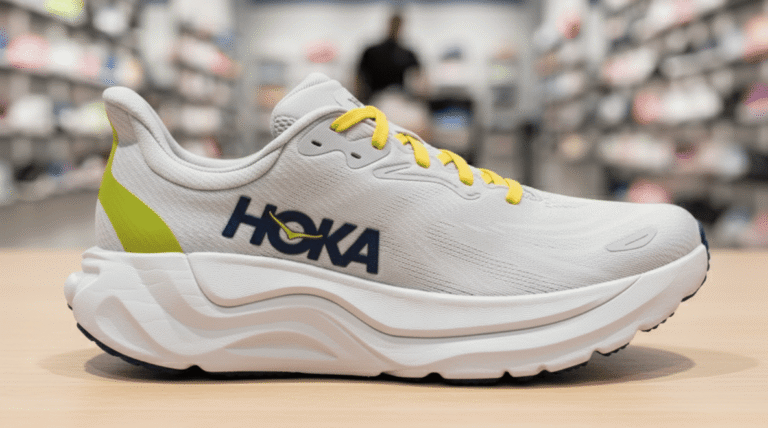
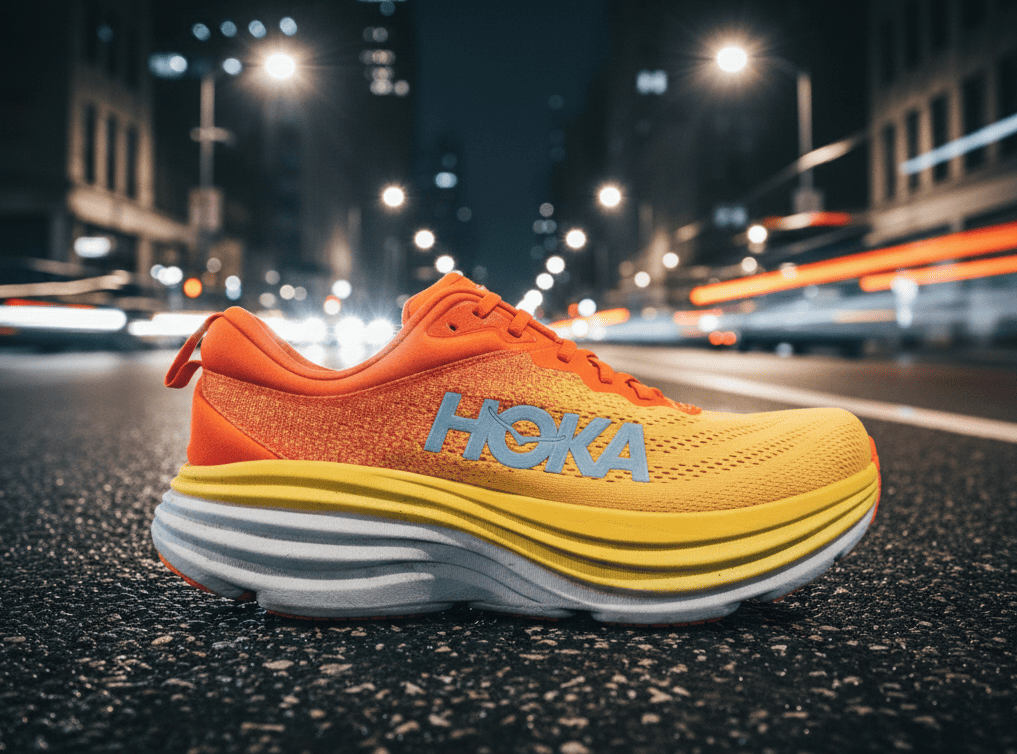

In the world of running shoes, the Hoka Bondi 8 sits on a throne of its own. It is the original, undisputed king of “max cushion,” a shoe that prioritizes plushness, protection, and comfort above all else. While other brands have scrambled to catch up, the Bondi series has always been the benchmark for what it means to run on clouds.
With the Bondi 8, Hoka introduced significant updates: a new look, a retooled sole, and the promise of an even softer, more stable ride. But in a market now flooded with high-stack competitors, does the king retain its crown? Or has it become too heavy and too “niche” for the average runner?
This in-depth review breaks down every component of the Hoka Bondi 8, from its plush upper to its massive midsole, to help you understand if this “recovery day” specialist deserves a place in your running rotation.
First Impressions: A Shock to the System
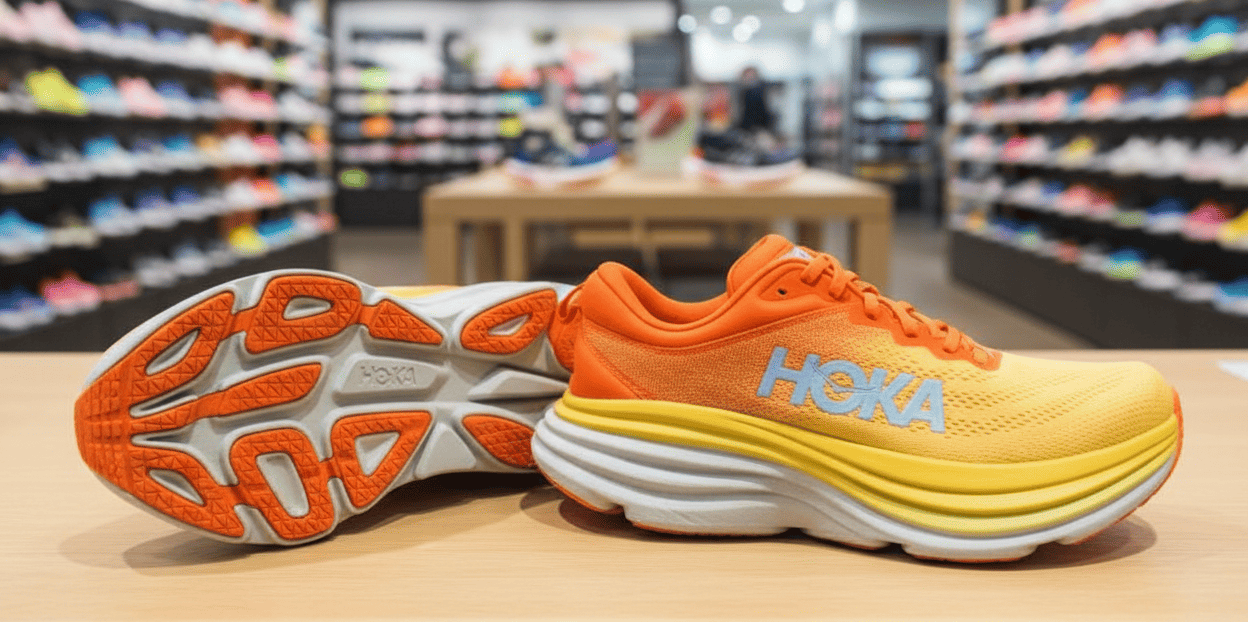
Opening the box, the Hoka Bondi 8 is visually striking. Its massive, chunky sole is what Hoka is famous for, and the 8th iteration leans into this with a new, flared geometry and an extended, beveled heel. It looks like a high-tech running-on-air machine.
The moment you put them on, you feel it. The cushioning is immediate and deep. However, many runners, especially those new to max-cushion shoes, are surprised by the initial feel. Despite its “max soft” marketing, the cushioning (which is the same compression-molded EVA as the Bondi 7) can feel surprisingly “flat” or “firm” underfoot, especially when just standing.
The magic, as the Running Shoes Guru review notes, happens when you start moving. The ride is “incredibly smooth” and “gliding.” While it’s a heavy shoe on the scale (tipping in just under 11 oz), the weight distribution is uniform, and the aggressive rocker geometry does a brilliant job of rolling your foot forward. The first run reveals the shoe’s true purpose: it’s not for speed, and it lacks “pop” or “responsiveness.” Instead, its happy place is a slow, consistent, easy pace where protection is the number one priority.
A Deep Dive: The Bondi 8 Upper
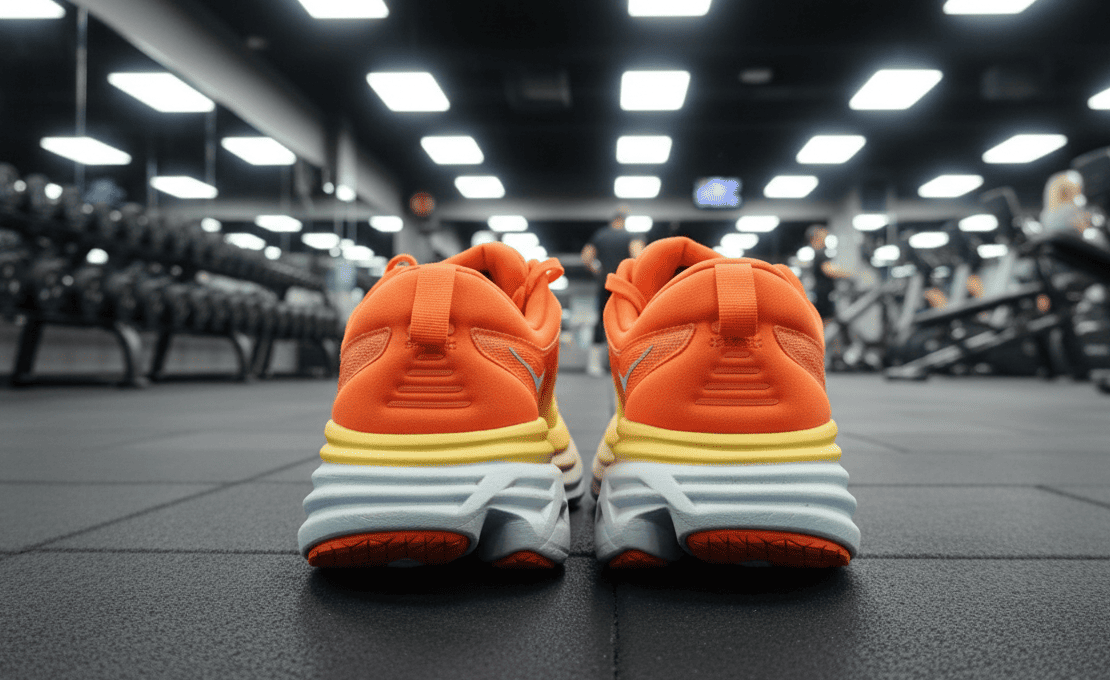
Hoka clearly spared no expense on the upper, designing it for one thing: pure, plush comfort. The engineered mesh is thick, soft, and feels premium. While this eliminated the need for many of the old overlays, it does come at the cost of breathability. This is a warm shoe, better suited for cool-weather runs.
The real highlights are in the details:
-
The Tongue: The new half-sleeve, gusseted tongue is plush, thick, and stays perfectly in place. It completely eliminates any lace pressure, allowing for a secure lockdown without any discomfort.
-
The Heel & Collar: The heel collar is lined with an almost comically plush lining that provides a soft, irritation-free grip on the Achilles.
However, the upper is not without its flaws. The Running Shoes Guru review points out that while the sole of the shoe got wider, the upper actually feels snugger and has less volume than its predecessor. The fit, especially in the midfoot and toebox, is described as “snug” and “tight.” For many runners, this is a significant issue, with some user comments confirming a “mashed” or “numb” toe feeling.
Verdict on the Upper: It’s a premium, comfortable, and well-locked-in upper, but it runs warm and has a surprisingly snug, narrow fit. It is highly recommended that most runners try the “Wide” (2E) version, even if they don’t typically wear wide shoes.
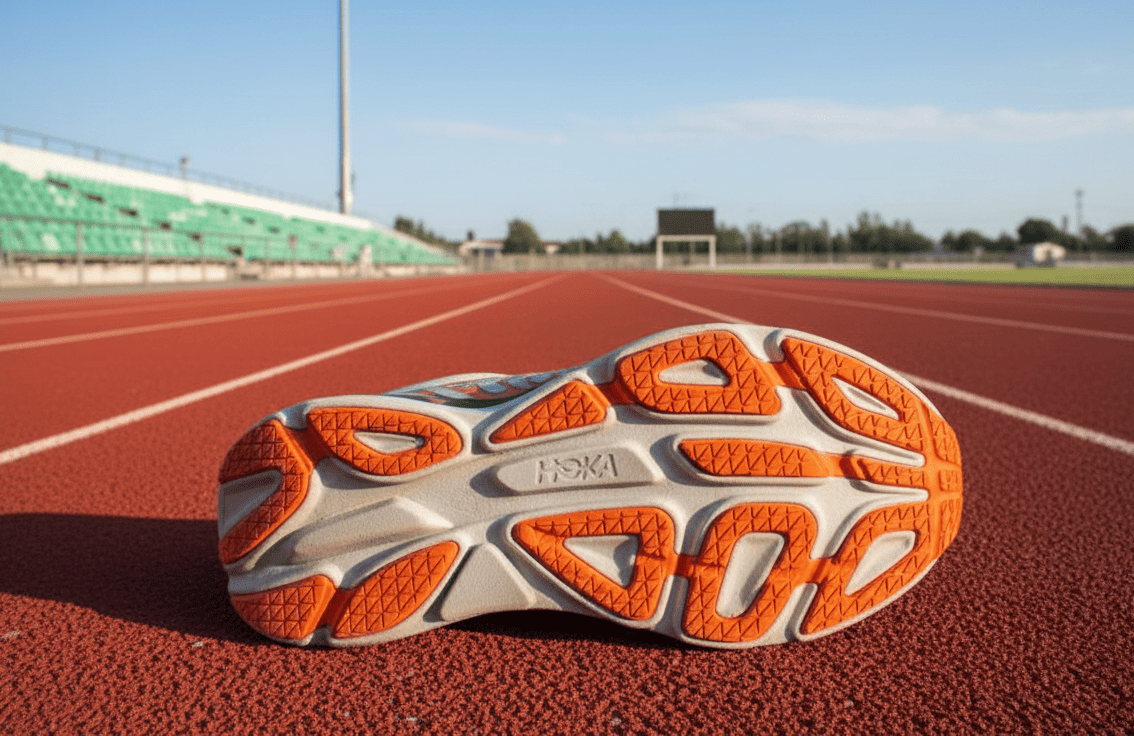
The Sole Unit: The Engine of Protection
The sole unit is the heart and soul of the Hoka Bondi 8. It’s what you pay for, and it’s what defines the entire experience.
Midsole: The King of Stability
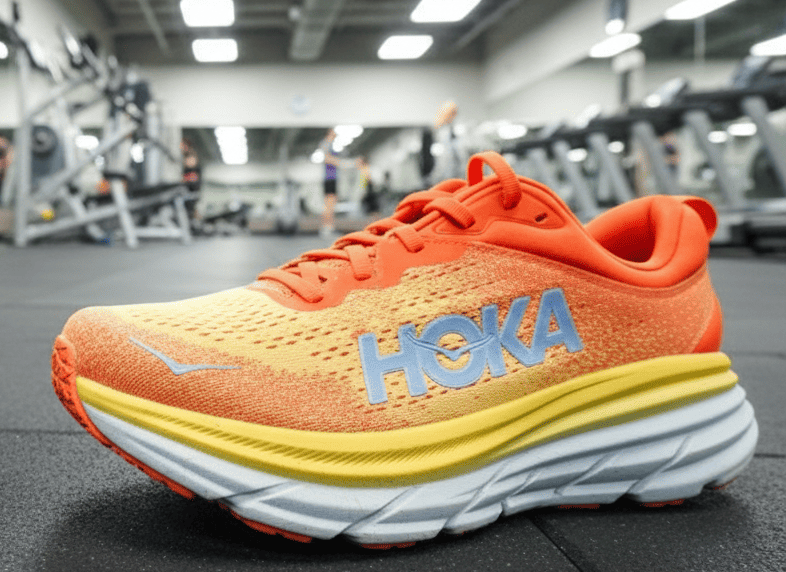
The midsole of the Bondi 8 uses the same compression-molded EVA foam as the Bondi 7. This is what led to some disappointment for runners expecting a “softer, bouncier” foam. The ride is “flat” and protective, not “responsive.” You “sink into” the foam rather than “bounce off” it.
But the biggest change, and arguably the shoe’s greatest strength, is its new geometry.
-
Wider Platform: The base of the Bondi 8 is significantly wider than before, creating an incredibly stable platform.
-
Extended Heel: A newly designed, extended, and beveled heel creates a “swallowtail” effect.
-
Rocker Geometry: The classic Hoka rocker is present and accounted for.
When you combine these three elements, you get an “incredibly smooth” transition, regardless of where your foot strikes. The wide platform acts like a “bucket seat” for your foot, keeping it centered and guided. This makes the Hoka Bondi 8 one of the most stable neutral shoes on the market, offering a high level of “natural” guidance without the need for traditional stability posts.
Outsole: Built to Last
The outsole features a generous amount of rubber for traction and durability. The traction is reliable on roads and can even handle some light, dry trails. Thanks to the thick midsole and durable rubber, the Bondi 8 is a shoe that is built to last for hundreds of miles.
The Ride: What the Hoka Bondi 8 Feels Like
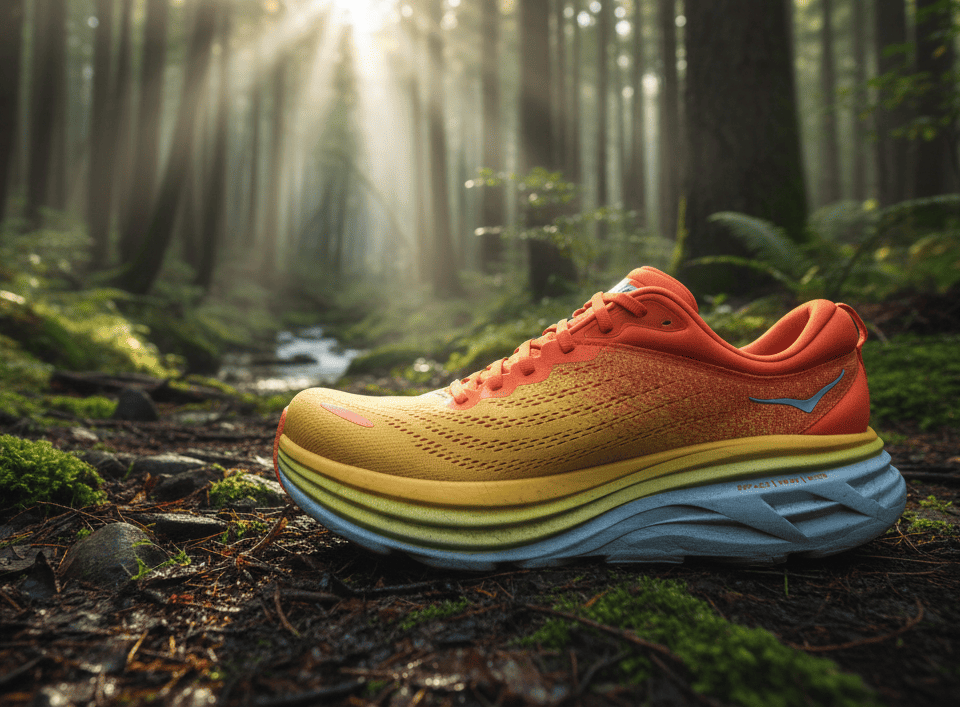
Let’s be perfectly clear: the Hoka Bondi 8 is not a versatile, “do-it-all” daily trainer. Some user comments aptly describe the feeling as “running in soft sand” because the foam “sucks the life out of your legs.”
This is not a shoe for tempo runs, speedwork, or race day. It is a highly specialized tool.
The ride is defined by its “amazingly smooth roll” and “great protection.” This is the shoe you reach for when your legs are sore from a hard workout. It’s the shoe for your slowest recovery days, your long, slow distance (LSD) runs, or for days when you just want to “clear your head” and log miles without any impact.
Its other “secret” use, as many users have discovered, is as a walking shoe. Its combination of max cushioning and high stability makes it arguably one of the best shoes on the planet for walking, standing all day (especially for nurses or hospitality workers), or for heavier individuals looking for maximum joint protection.
Final Verdict: Is the Hoka Bondi 8 Worth It?
The Hoka Bondi 8 is a “book” that should not be judged by its “cover.” It may look clunky and heavy, but it delivers on its promise of an incredibly smooth, stable, and protective ride.
At $165, it is a premium-priced shoe, and its lack of versatility makes it a tough sell as a runner’s only shoe. It is a “niche” shoe. But in its niche—recovery days, easy runs, and walking—it is absolutely best-in-class. While many new “super stacked” shoes have entered the market, the Hoka Bondi 8 remains the benchmark that all other max-cushion shoes are compared to.
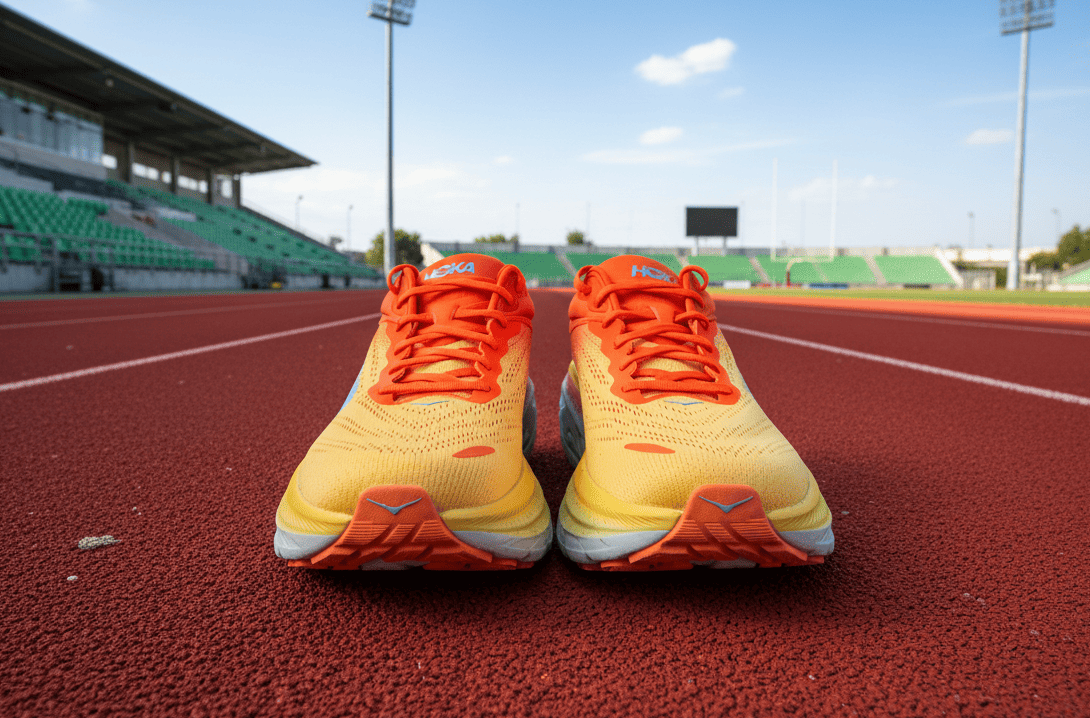
Who Should Buy the Hoka Bondi 8?
-
The Recovery Day Runner: If you want a specialized shoe to protect your legs on your slowest days, this is it.
-
Walkers and “All-Day” Standers: This is arguably the best shoe on the market for walking or for jobs that require standing all day.
-
Heavier Runners: The wide, stable base and deep cushioning offer a fantastic, protective platform.
-
Runners Who Want Max Stability: If you are a neutral runner who still appreciates a “guided” and stable ride, the Bondi 8 is for you.
Who Should Not Buy the Hoka Bondi 8?
-
Runners Wanting a “Do-It-All” Shoe: This shoe is not versatile. It is heavy, clunky, and has no responsiveness for faster paces.
-
Runners on a Budget: This is an expensive shoe to be used for only one type of run.
-
Runners with Wide Feet (in the standard model): The upper runs very snug. You must try the wide version.
-
Runners Looking for a “Bouncy” Ride: The foam is “protective,” not “energetic.” If you want “pop,” look at a Hoka Clifton, Asics Novablast, or Saucony Endorphin Speed.